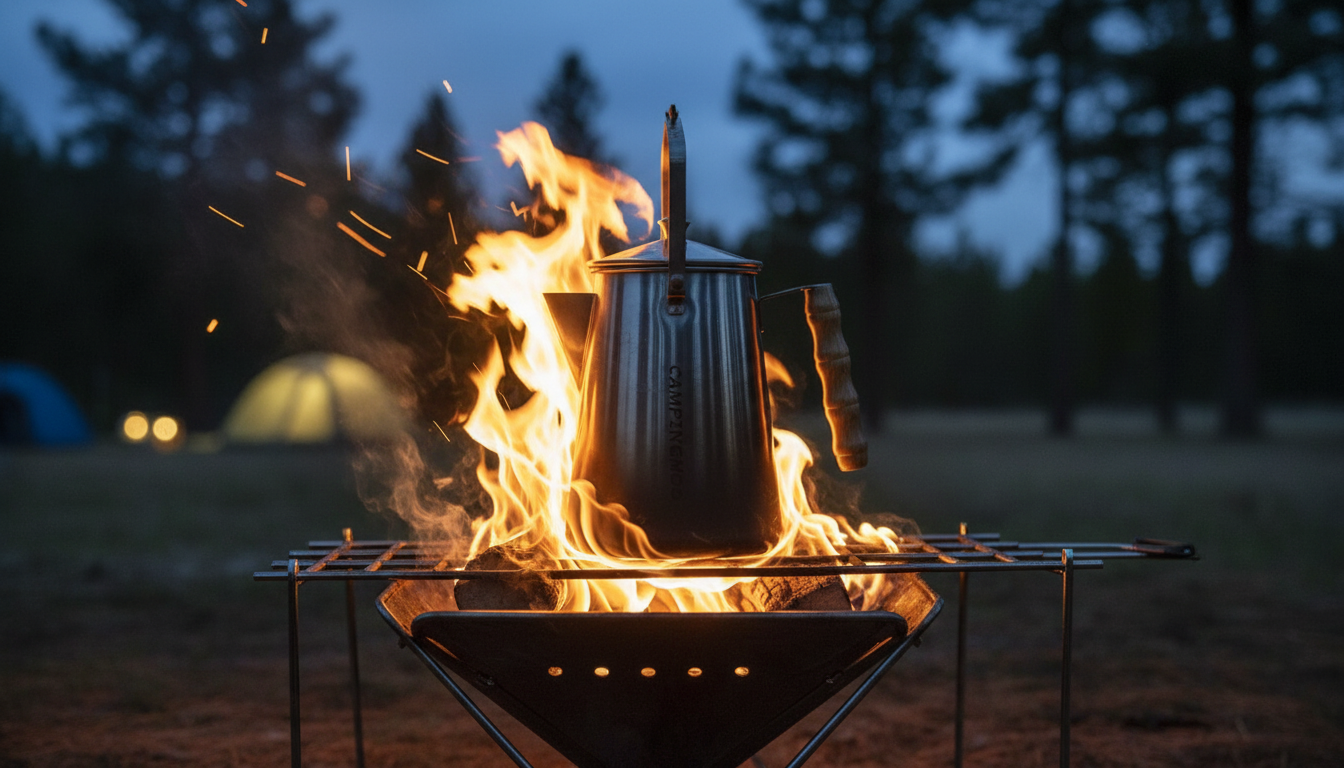
Neither material is “better” for every camper—titanium wins when weight and corrosion resistance matter most, while stainless steel is often the smarter pick for durability per dollar and everyday ruggedness. The right choice depends on how far you’re carrying your kit, how you cook, and whether you prioritize long-term toughness or ultralight packing.
Titanium is prized by backpackers because it’s extremely light for its strength. A titanium pot, mug, or spork can noticeably reduce pack weight on long miles. It also resists rust and corrosion exceptionally well, which is useful in wet climates or coastal trips.
The tradeoff is cost and cooking performance. Titanium tends to heat quickly and can develop hot spots, making it easier to scorch foods if you’re simmering sauces or cooking anything more delicate than boiling water.
Stainless steel camping cookware is typically more affordable and feels reassuringly sturdy. It’s a great choice for car camping, base camps, group cooking, and anyone who doesn’t want to baby their gear. Stainless is also less prone to denting and can handle aggressive scrubbing after messy meals.
The main drawback is weight. A stainless pot or bottle can be significantly heavier than titanium, which matters if you’re carrying gear all day.
For a deeper side-by-side breakdown and shopping considerations, visit the full guide here: https://pantrypulse.shop/is-titanium-or-stainless-steel-better-for-camping/.
No—titanium is non-reactive, so it won’t add metallic flavors or react with acidic foods. Taste issues are more likely related to scorching from hot spots than the material itself.








Leave a comment