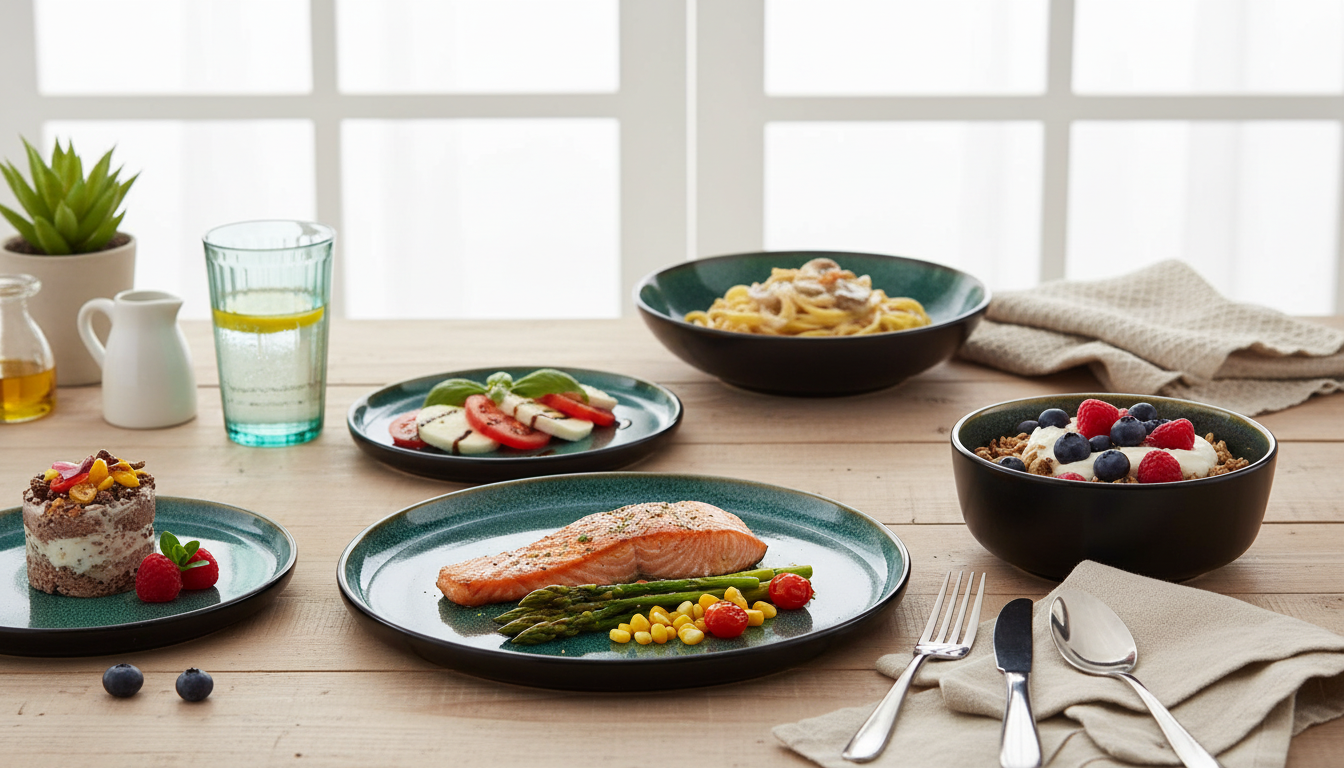
A reactive glaze finish brings depth and variation to each piece, while durable ceramic and dishwasher-safe convenience make a 24-piece set a practical choice for daily use. If you’re setting a table for six—whether it’s weeknight pasta or a casual get-together—this guide covers what’s typically included, how reactive-glaze ceramic performs in a busy kitchen, and the simple habits that help the finish stay beautiful over time.
Reactive glaze is popular for a reason: it looks curated without feeling fussy. During firing, the glaze reacts to heat in a way that creates organic variation across the surface, so plates and bowls coordinate while still looking one-of-a-kind.
If food safety is top of mind, it’s worth sticking with reputable sellers and reading care guidance. For background on ceramicware materials, the U.S. Food & Drug Administration (FDA) overview on lead in ceramicware is a helpful reference.
A 24-piece dinnerware set is commonly designed as four components per place setting for six people. That mix covers most meals without constantly cycling the dishwasher, and it’s an efficient baseline if you’re stocking a new kitchen or replacing a mismatched collection.
For everyday routines, the biggest advantage is flexibility: bowls handle cereal, soup, and “meal bowl” dinners; side plates pull double duty for lunches and desserts; and mugs are there for coffee, tea, and cocoa.
| Piece type | Count | Everyday use |
|---|---|---|
| Dinner plates | 6 | Mains, plated dinners |
| Salad / side plates | 6 | Lunches, sides, desserts |
| Bowls | 6 | Cereal, soups, pasta, meal bowls |
| Mugs / cups | 6 | Coffee, tea, cocoa |
If you’re shopping for a coordinated set with a rich green finish, see the 24-Piece Green Reactive Glaze Dinnerware Set – Dishwasher Safe, Ceramic Dishes for 6.
Dishwasher-safe dinnerware is all about saving time, but a few loading habits can make the difference between “still looks great after months” and “why are there tiny chips along the rim?” Reactive-glaze ceramic is durable, yet edges can still knock together during wash cycles.
For general dishwashing efficiency tips (including reducing unnecessary rewashing), the U.S. EPA WaterSense guidance is a practical resource.
Most wear and tear happens outside the meal—during stacking, cabinet storage, and loading/unloading. Ceramic pieces are strongest when they’re supported evenly and not forced into unstable stacks.
For cooking and serving tools that are gentle on glazed surfaces, pair your dinnerware with the 8-Piece Heat-Resistant Silicone Kitchen Utensils Set with Wooden Handle.
The appeal of green reactive glaze is its depth: it brings color to the table without demanding a lot of extra styling. A few easy pairings can make everyday meals feel more intentional.
For brunch spreads and fresh drinks that match the green-and-neutral vibe, the Mini Portable Electric Juicer is an easy add-on for citrus, smoothies, or quick dressings.
Reactive-glaze dinnerware intended for food contact should be formulated and fired for food safety. Buy from reputable sellers and follow the product’s care guidance, and avoid using pieces with visible cracks in the glaze or heavy chipping.
Many glazed ceramic sets are microwave-safe, but oven safety varies by manufacturer and piece design. Check the product instructions and avoid rapid temperature changes (like moving from fridge to a hot oven) to reduce the risk of thermal shock.
Use non-abrasive methods such as a baking soda paste, gentle dish cleaners, and a soft sponge. Metal marks from flatware are common and often lift with mild cleaning without needing harsh scouring.












Leave a comment