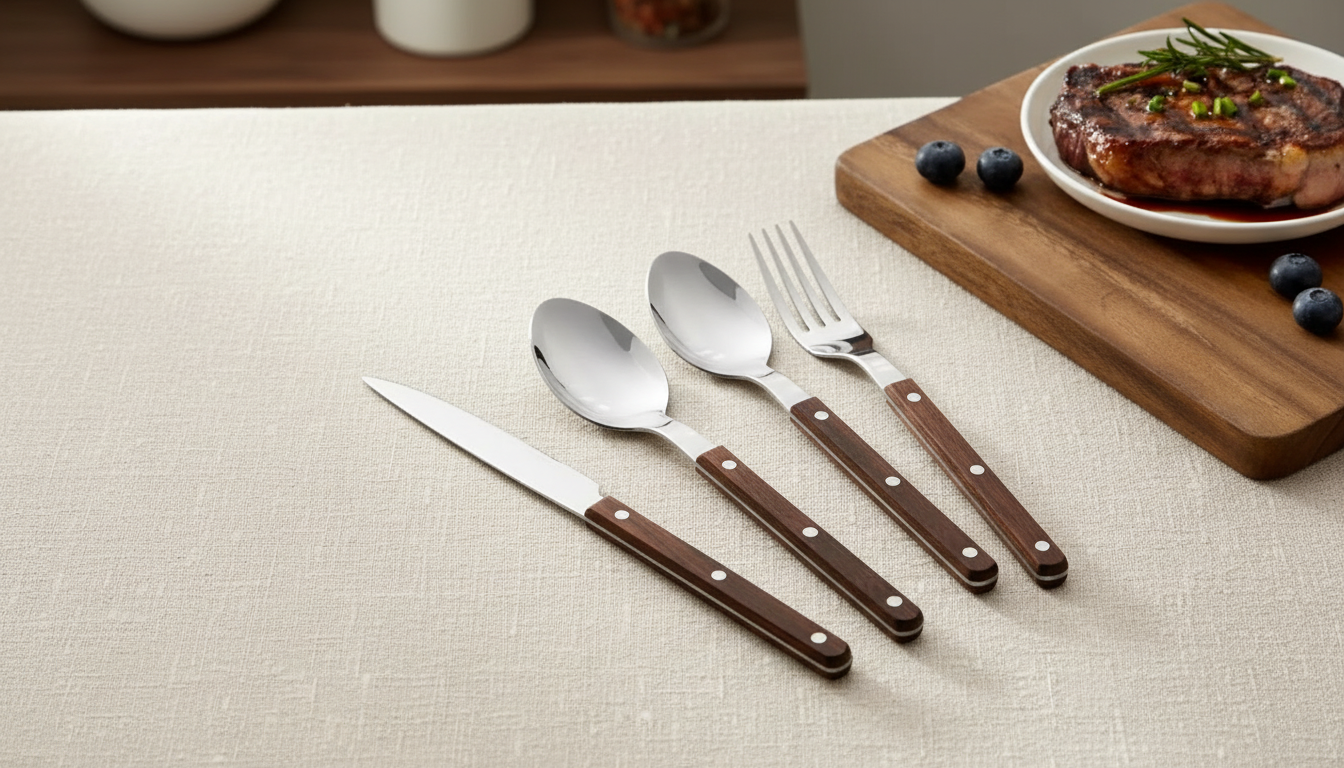
A stainless steel portable tableware set makes it easy to eat comfortably on the go—at the office, in a lunchroom, on a picnic blanket, or while traveling—without relying on flimsy disposable utensils. Stainless steel is sturdy, easy to clean, and resists absorbing odors and stains, making it a practical choice for daily use.
A portable stainless steel set is a compact utensil kit that typically includes everyday essentials like a spoon, fork, and chopsticks or a knife, stored in a slim case or pouch. It’s designed to live in a work bag, backpack, lunch tote, or car so it’s ready whenever a meal happens—planned or not.
For packed lunches, takeout, camping meals, and quick snacks between errands, having a reliable set helps avoid the all-too-common disposable utensil problems: bending forks, splintering wooden cutlery, or missing pieces altogether. Stainless steel also holds up to repeated washing and doesn’t retain flavors the way some plastics can, which is especially helpful if yesterday’s curry and today’s yogurt share the same bag.
For more on safe food-contact materials and general food handling, the U.S. Food and Drug Administration and the CDC food safety guidance are useful references.
Stainless steel resists warping and cracking, so it stands up to the real-world routine of daily commutes, tossing into a backpack, and frequent washing. It’s the kind of small upgrade that quietly makes weekday lunches feel less improvised.
Because stainless steel is non-porous, it’s less likely to hang onto strong smells or flavors after washing. That “soapy” taste that sometimes clings to lower-quality utensils is also less common when the surface is smooth and well-finished.
Most stainless steel utensils are dishwasher-friendly; just confirm any care notes if your set includes a case, painted accents, or special coatings. For best results, dry after washing to reduce water spots.
Compared with most disposable options, a stainless steel fork and spoon typically offer better weight, balance, and grip—noticeable when eating salads, noodles, and rice bowls where control matters.
Not all portable utensil kits feel the same in-hand. A few details can make the difference between a set that stays in your bag for years and one that ends up forgotten in a drawer.
| Feature | Why it helps | Good sign |
|---|---|---|
| 18/8 or 18/10 steel | Better corrosion resistance for frequent washing | Product lists material clearly |
| Smooth, even finish | Easier cleanup; fewer stuck-on bits | No rough seams at joints |
| Secure case or pouch | Keeps utensils clean during commutes | Case closes firmly; easy to wipe |
| Comfortable handle shape | Better control for daily lunches | No sharp edges; balanced weight |
| Appropriate length | Fits bag while still easy to use | Matches how/where it will be carried |
A portable stainless steel set earns its keep in small, everyday moments—especially when meals don’t happen at home.
For anyone building a more reusable routine, the U.S. EPA’s Reduce, Reuse, Recycle resources offer practical context for reducing single-use items over time.
Yes—stainless steel is widely used for food-contact items. Choosing a quality grade and cleaning it properly (especially after salty or acidic foods) helps keep it in good shape; avoid letting deep scratches build up over time.
Most stainless steel utensils are dishwasher-safe, but it’s smart to check any care notes for included cases, coatings, or painted parts. Drying after washing helps reduce water spots and keeps the finish looking cleaner.
Start with warm soapy water, then try a baking soda-and-water paste for stubborn film. For rainbow tint or mineral buildup, a mild vinegar wipe can help—rinse well and dry, and avoid harsh abrasives that can scratch the surface.









Leave a comment