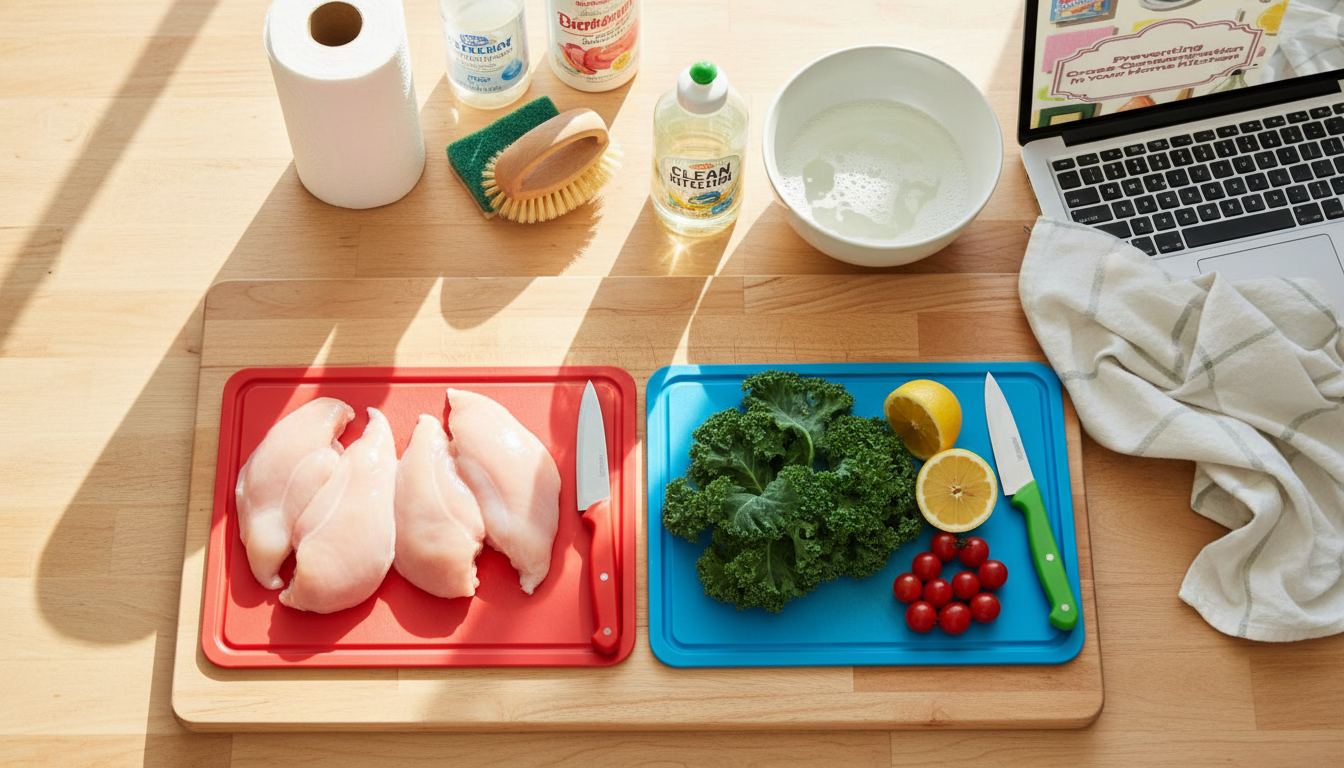
Cross contamination happens when harmful bacteria or allergens move from one food, surface, or utensil to another. These five habits help keep meals safer at home and reduce the risk of foodborne illness.
Store raw meat, poultry, and seafood on the lowest shelf in the refrigerator in a sealed container to prevent drips. Keep produce, cooked foods, and snacks higher up and covered.
Dedicate one cutting board (and knife, tongs, or spatula) for raw proteins and another for fruits, vegetables, and cooked foods. If you only have one board, wash, rinse, and sanitize it before switching tasks.
Wash hands with soap and warm water for at least 20 seconds before prepping food and after handling raw meat, eggs, or seafood. Also wash after touching trash, phones, pets, or wiping counters.
Wiping a counter can spread germs. Clean with hot, soapy water first, then sanitize high-touch areas like counters, sink handles, faucet knobs, and refrigerator doors, especially after handling raw foods.
Never reuse a marinade or sauce that touched raw meat unless it’s boiled. Use a clean plate for cooked food (not the one that held raw), and use fresh utensils for tasting and serving.
For more detailed kitchen steps and examples, visit this guide on ways to avoid cross contamination.
For 5 Simple Ways to Prevent Cross-Contamination at Home, the best answer depends on fit, material, care instructions, and how the product will be used day to day.
Checking those details first helps avoid a poor match and keeps the choice practical after delivery.
Cleaning removes visible dirt and food residue, while sanitizing reduces germs to a safer level. For best results, clean first and sanitize second.









Leave a comment