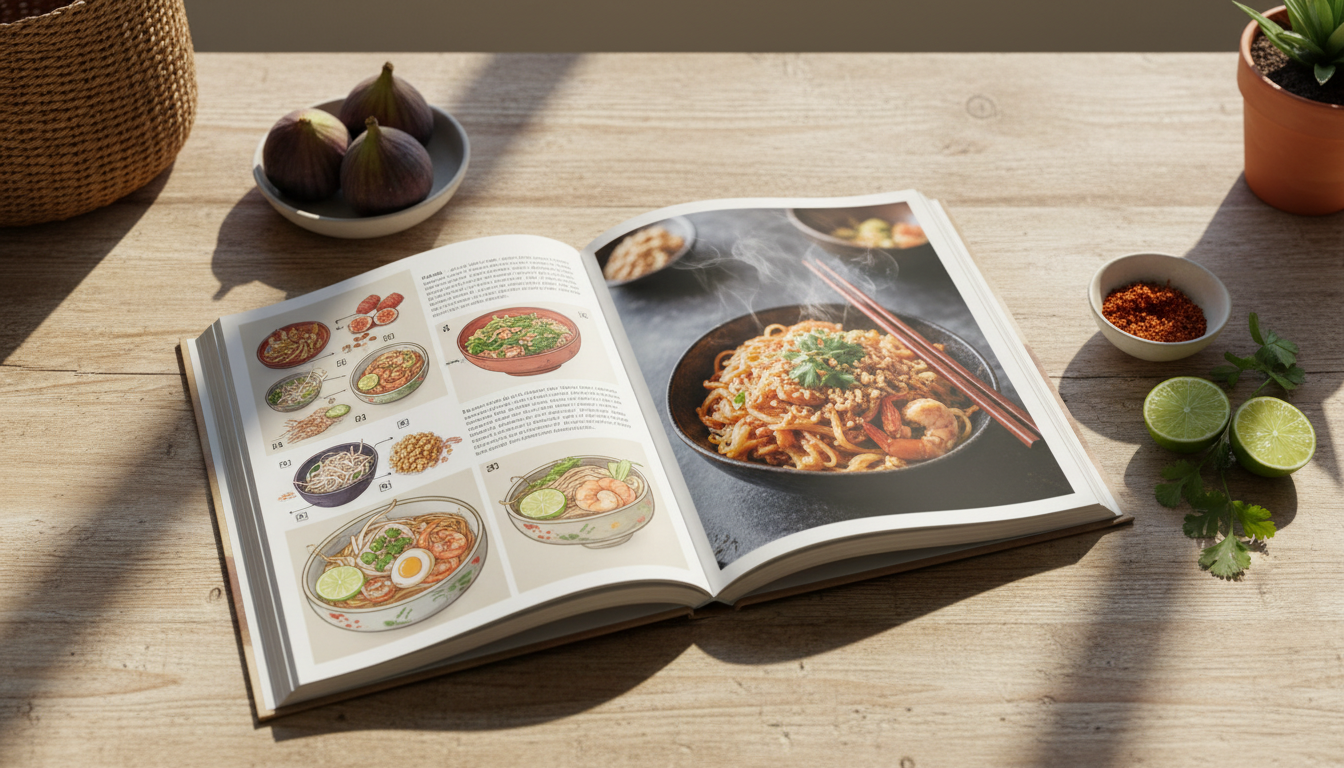
Pad Thai tastes simple until the pan hits high heat. The noodles need the right soak, the sauce needs a clear sweet–sour–salty backbone, and timing matters more than fancy tools. The good news: the street-stall effect is repeatable at home when you treat Pad Thai like a fast, staged cook—everything prepped, heat steady, and the finish added off-heat so it stays bright.
For deeper technique notes and variations you can keep on your phone while cooking, Savor Thailand: Mastering Pad Thai & Street Food at Home – Thai Food Recipes eBook for Pad Thai & Street Food Lovers is a practical playbook for staying consistent without turning dinner into a project.
For a solid overview of wok-style heat management and stir-fry dynamics, Serious Eats has reliable technique guidance: https://www.seriouseats.com/.
Pad Thai is forgiving, but only if substitutions preserve the balance. Think in roles: tang (tamarind), sweetness (palm sugar), salt/umami (fish sauce), aroma (garlic/shallot), and crunch/brightness (peanuts and lime).
| Classic | Good Substitute | Best Use | Notes |
|---|---|---|---|
| Tamarind paste | Tamarind concentrate + water | Sauce base | Adjust water to reach a pourable syrup |
| Palm sugar | Light brown sugar | Sweetness | Dissolve before adding to the pan |
| Garlic chives | Regular chives + a little scallion green | Finishing herb | Add off-heat for freshness |
| Dried shrimp (optional) | Extra fish sauce + a pinch of mushroom powder | Umami boost | Use sparingly to avoid overpowering |
For ingredient deep-dives (especially tamarind and fish sauce brands, plus how Thai cooks build balance), Hot Thai Kitchen is a dependable reference: https://hot-thai-kitchen.com/.
Clumpy Pad Thai almost always starts before the pan. Rice noodles should enter the wok pliable but not fully tender; they finish cooking as the sauce reduces.
If you like quick, clean prep (especially for limes, garlic, or chilis), a small countertop helper can speed things up without clutter. The Mini Portable Electric Juicer is handy for fresh lime juice on demand, which matters most at the finish.
For nutrition lookups on common ingredients (shrimp, rice noodles, peanuts), USDA FoodData Central is a solid reference: https://fdc.nal.usda.gov/.
| Step | What goes in | Approx. time | Goal |
|---|---|---|---|
| 1 | Oil + garlic/shallot | 15–30 sec | Fragrant, not browned |
| 2 | Protein | 1–3 min | Light sear, juicy center |
| 3 | Noodles + sauce | 2–4 min | Coated noodles, reduced sauce |
| 4 | Egg | 30–60 sec | Soft curds, mixed through |
| 5 | Sprouts + chives | 15–30 sec | Warm, still crisp |
| 6 | Peanuts + lime + chili | Off-heat | Fresh aroma and crunch |
A small upgrade that helps this fast sequence feel easier: a comfortable, heat-safe tool set you can grab quickly. The 8-Piece Heat-Resistant Silicone Kitchen Utensils Set with Wooden Handle keeps tossing and folding smooth while protecting nonstick surfaces.
If you want a focused set of Thai street-food recipes built around repeatable Pad Thai technique, Savor Thailand: Mastering Pad Thai & Street Food at Home – Thai Food Recipes eBook for Pad Thai & Street Food Lovers is designed for quick weeknight execution, with room to customize shrimp, chicken, tofu, and vegetarian variations.
Tamarind provides the signature sweet-sour backbone, so skipping it changes the dish. As a temporary workaround, use lime plus a small amount of vinegar and a bit more sugar, adjusting in tiny increments until the sauce tastes balanced (but expect a different flavor profile).
Over-soaking (especially in hot water) makes noodles fragile and gummy. Soak in room-temperature water until pliable, drain thoroughly, and finish doneness in the hot pan while tossing; also avoid overcrowding, which steams noodles and encourages sticking.
Use firm tofu and add umami with ingredients like mushroom powder or a vegetarian “fish sauce” alternative, keeping the sweet–sour balance intact. Don’t skip peanuts, lime, and aromatics—those finishing notes deliver much of the street-food aroma.










Leave a comment